Key Highlights
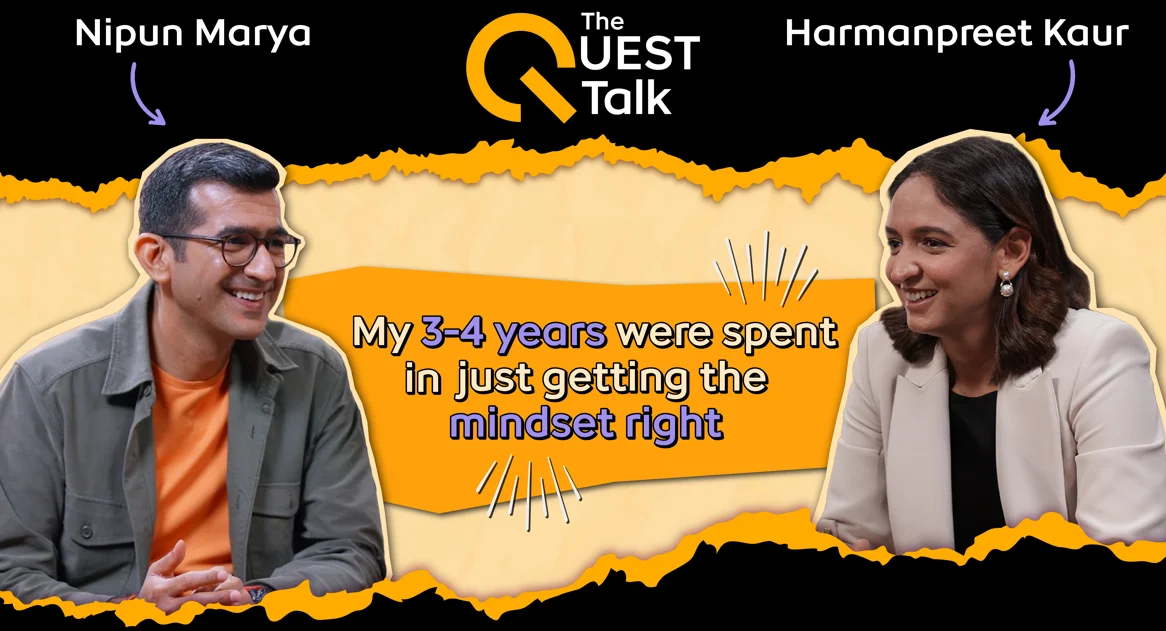
- iQOO featured Harmanpreet Kaur in its podcast The Quest Talk hosted by Nipun Marya.
- She spoke about uncertainty before the Women’s Premier League launched in 2023.
- She said players felt “not being trusted” during the league’s long delay.
- She explained how WPL reshaped professionalism and talent depth in Indian women’s cricket.
iQOO brought Harmanpreet Kaur to its podcast The Quest Talk, where the India captain spoke candidly about the long wait before the Women’s Premier League began and what that delay meant for players across the country.
In conversation with host Nipun Marya, Harmanpreet did not just revisit milestones. Instead, she described uncertainty, hesitation from administrators, and the emotional impact of waiting for a professional league that many believed should have arrived earlier.
Her words offer a rare player’s perspective on a turning point in Indian women’s cricket.
“We were feeling sad”: what players felt before WPL existed
Long before the WPL became reality in 2023, the idea of a franchise league for women’s cricket had already been circulating. But progress was slow. And players noticed.
Harmanpreet recalled the mood clearly.
“We were feeling sad as we were not being trusted.”
It was not about recognition alone. According to her, the absence of a high-pressure domestic league meant fewer chances to prepare for international cricket environments.
“There was a very big gap between domestic cricket and international cricket standards,” she said.
That gap shaped careers. Domestic players often entered international matches without exposure to stadium crowds, televised pressure, or tactical intensity.
Why did the WPL take so long to launch?
During the podcast, Harmanpreet pointed to a concern that quietly influenced decision-making for years.
Depth.
She explained that administrators questioned whether India had enough players ready to sustain multiple competitive franchises.
“The WPL conversation was going on for a long time, but for some reason things were not moving forward,” she said.
Then she added what players wondered privately at the time.
“That time we were feeling sad about why they are not trusting us.”
According to her, management worried about “low bench strength” and whether enough squads could be formed at the required level.
Those doubts delayed momentum. But they did not stop it permanently.
How did WPL change players coming into Team India?
When the league finally arrived, Harmanpreet noticed the difference almost immediately.
She compared its impact to the role the IPL played in strengthening India’s men’s cricket structure.
“We saw a lot of talent coming up through IPL,” she said. “So we always thought once WPL starts we will also get a lot of talented Indian players.”
That expectation quickly became visible in the national setup.
Younger players began arriving with match awareness, structured training habits, and confidence shaped by franchise competition.
“The Indian players coming from WPL have a totally different mindset,” she explained. “With well-planned routines that make them great professionals.”
It marked a shift not just in skill levels, but in preparation culture.
Why iQOO chose this moment for The Quest Talk conversation
The episode stands out because it moves beyond performance highlights. Instead, it documents a transition phase in Indian sport through a player’s voice.
Rather than presenting statistics, the discussion captures how athletes experienced uncertainty before structural change arrived.
Through Harmanpreet’s reflections, the podcast connects past hesitation with present confidence in the women’s game. And in doing so, iQOO positions The Quest Talk as a space where athletes narrate the turning points that shaped modern Indian cricket.