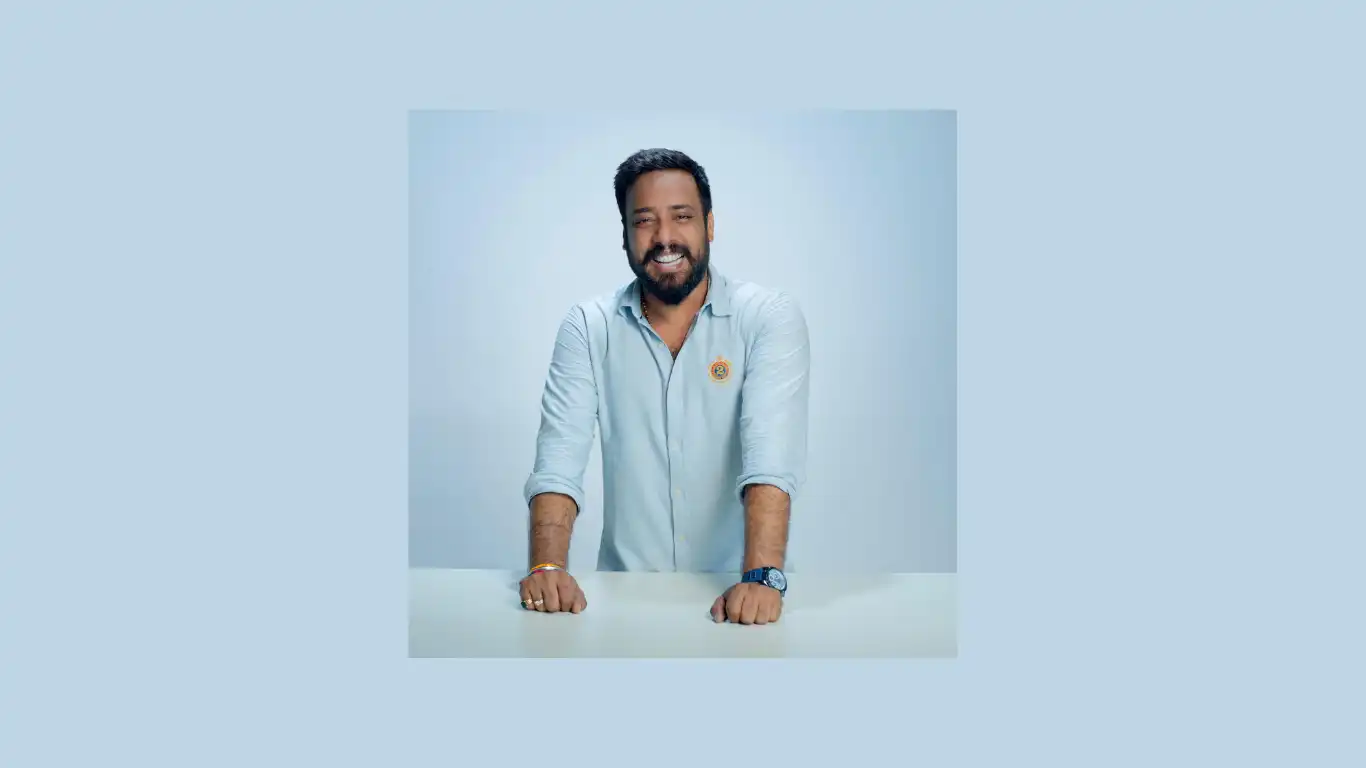
Tech Talk With Chandra Mani, Founder and Executive Producer at Useful Garbage Creations
Artificial intelligence is rapidly reshaping the advertising and filmmaking landscape. From generating scripts and visuals in minutes to enabling hyper-personalized campaigns through real-time data, AI has introduced a new level of speed and efficiency. But it has also sparked an ongoing conversation, can technology replace human creativity?
As brands lean more on automation, analytics, and AI-powered production tools, the industry is navigating a critical balance between scale and originality. The question is no longer whether AI will be used, but how it should be used without losing the human touch that makes stories resonate.
In this edition of Tech Talk, ITmatters speaks to Chandra Mani, Founder and Executive Producer at Useful Garbage Creations. With over a decade of experience in advertising, he shares how technology has evolved, where AI fits into the creative process, and why human insight continues to remain at the heart of meaningful storytelling.
You started your journey in 2010. How has technology in digital advertising evolved since then, from early video editing tools to modern cloud platforms?
“I feel technology keeps changing every day, every minute. That’s something constant. But honestly, the core of the work is still the same. What has really changed is the ease of working. Earlier, the tools we used were slower and a lot more dependent on specific people. Today, things have become much simpler and faster. The biggest difference I see is in delivery time and execution speed. In advertising, timing is everything, and that has improved a lot.
Now we have very advanced and easy tools. Anyone can technically edit today. But that doesn’t mean everyone is a good editor. That still comes from skill and understanding. Technology doesn’t decide that. I also feel the dependency on one person has reduced. Work has become more flexible, more accessible.
So yes, things have definitely evolved. The process has become faster, execution has become smoother, and delivery timelines have reduced. But the thinking behind the work, that still remains human.”
What major benefits have you gained from tools like real-time analytics, AR/VR for ads, or programmatic advertising? Have they enabled faster, more personalized campaigns for clients such as Colgate or Adidas?
“I feel the biggest benefit has been clarity and speed. Earlier, a lot of decisions were based on instinct and experience. Now, with real-time analytics, you actually know what is working and what is not. That helps in making faster decisions and improving campaigns while they are still running.
Execution has also become much quicker. Whether it is adapting content into multiple formats or targeting different audiences, everything moves faster now. Personalization has improved as well. You can create different versions of the same campaign for different audiences, which was not so easy earlier.
AR and VR are interesting, but I feel they are still evolving. They work well in certain categories where experience matters. At the same time, technology doesn’t replace understanding of the audience. It only supports it. If the idea is strong, it works. If not, no amount of technology can fix it.”
What challenges have come with these advancements, such as data privacy concerns, over-reliance on algorithms, or compatibility issues across platforms? How do you think this shapes the future of the industry?
“Honestly, I feel the idea of complete privacy has already changed a lot. Today, most of us are anyway living on digital platforms, constantly sharing and consuming content. So data is always being used in some way.
But I think the bigger challenge is over-reliance on algorithms. Sometimes brands depend too much on data and numbers, and the risk is that creativity becomes slightly formula-driven.
If everything is decided by algorithms, storytelling can lose its uniqueness. Another challenge is managing content across multiple platforms. Each platform has different formats and expectations, so maintaining consistency becomes difficult.
Going forward, I think the industry will move towards a balance where technology and data will guide decisions, but human creativity will still lead. At the end of the day, people connect with emotions, not with algorithms.”
AI now generates images, videos, and scripts in minutes. How has this changed the creative process for you, and do you view it as a helpful collaborator or a potential disruptor to human creativity in filmmaking and branding?
“For me, AI is more of a collaborator than a disruptor. It has definitely changed the creative process. A lot of things have become faster. Whether it is writing, refining scripts, suggesting dialogues, creating storyboards, or generating references, everything moves much quicker now. It helps in exploring multiple ideas in a shorter time.
In advertising especially, it has made pre-production and ideation much more efficient. You can present ideas better and faster to clients. But at the same time, I strongly feel that AI can generate content, but it cannot live the emotion. When it comes to human emotions, natural performances, drama, or humor, that still comes from real experiences. AI can assist, but it cannot feel.
So I don’t see it as something to fight. I think we should take advantage of it and use it to make our work easier. Yes, it will impact certain areas like fashion, jewelry, or product advertising where visuals are more controlled. But when it comes to emotion-driven storytelling, whether in films or advertising, I don’t think it can replace human creativity.
So for me, AI is a tool. It can make things faster and more efficient, but the core of storytelling will always remain human.”
As AI streamlines production, how are you balancing its efficiencies with authentic storytelling, particularly for complex brand videos or print campaigns?
“For me, it is more about where to use AI and where not to use it. I treat AI as a support system in the process, not as the main driver. It helps in speeding up certain stages like references, layouts, early drafts, or exploring multiple directions quickly.
But when it comes to the actual storytelling, especially in complex brand films or print campaigns, I prefer to stay hands-on. That part needs clarity of thought, understanding of the brand, and control over the narrative.
In fact, sometimes AI gives you too many options, and that can also create confusion. So the role becomes more about filtering and choosing the right direction, rather than just generating content. Also, in print and brand films, detailing is very important. Small things like tone, expression, styling, or even the way a moment is held cannot be left completely to AI. That still needs human supervision.
So the balance is not very complicated. Use AI to move faster in the process, but keep the final decisions and storytelling in your control. That way, efficiency improves, but the authenticity of the work remains intact.”
What was your last production and how did you deploy different technologies for the final outcome?
“In today’s scenario, the biggest factor is time. Everything has become extremely fast. Clients want quick turnarounds, and we are working in very tight timelines. Technology helps a lot in managing this. Earlier, a director’s treatment deck used to take almost a week. Now, with tools like Canva and ready templates, it can be done overnight. Storyboards earlier took four to five days, but now with AI, you can generate multiple options within a few hours.
Even in editing and music, things have changed. Earlier, we used reference tracks and then worked with composers later. Now, AI tools can create close reference music, which helps in presenting a clearer idea to the client.
One very recent example is from my last feature film, Bara Badhu. For the titling work and creative plates, we initially wanted to do it manually using Pattachitra, which is a traditional art form from Odisha. We were trying to collaborate with local artists for that.
But the challenge was timelines. We couldn’t match the pace required for the project. So we decided to use AI, and we created those creative slates and title designs using AI tools. It helped us achieve a similar visual direction while also staying on schedule.
So this is where I feel technology really supports us. It helps us maintain speed without completely compromising on the vision. At the same time, you still need to guide it properly. Technology gives you options, but the final decision and taste still come from you.
Overall, it has helped us move faster, present better, and execute efficiently, especially under tight deadlines.”