Part 7 of Tech That Matters
About 40% of the world’s plastic waste originates from packaging alone. In India, packaging waste — especially plastic — makes up a large share of the country’s total plastic use and disposal. Much of this comes from single-use items and products with short shelf lives. Unfortunately, a significant portion of this waste is not recycled, often ending up in landfills or being improperly discarded, contributing to environment pollution.
But what if packaging didn’t need to last forever?
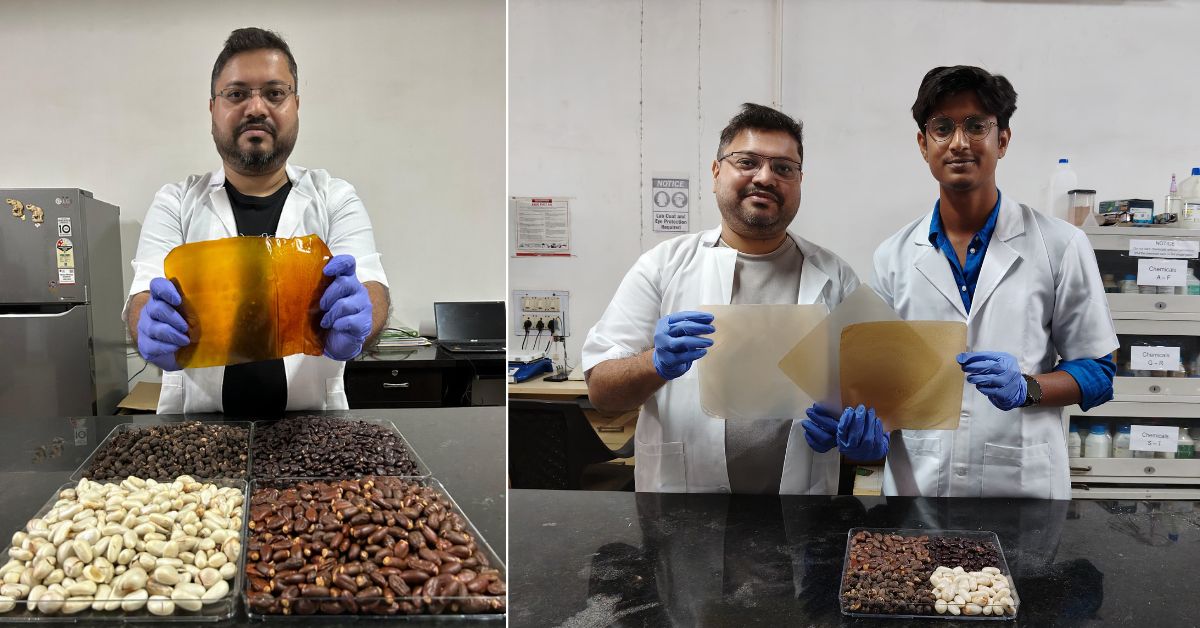
A team of scientists at India’s National Institute of Technology (NIT) Rourkela is showing us a radical alternative. By turning fruit seeds into biodegradable packaging that disappears within 60 days, they are building a circular future — one that begins with food and ends with fertile soil.
Turning Agricultural Waste into Packaging Gold
Plastic films like LDPE and polystyrene dominate the food industry due to their durability. But they also leave behind microplastics that seep into the environment and human bodies.
Dr. Preetam Sarkar and his team from the Department of Food Process Engineering at NIT Rourkela decided to approach the problem from nature’s side.
“Jackfruit, jamun, and litchi seeds contain valuable starches, perfect for building strong, biodegradable films,” Dr. Sarkar tells The Better India.
Paired with tamarind kernel polysaccharides, these seed-based starches form the base of a durable, plant-based film that mimics plastic — without the pollution.
Enhancing Shelf Life with Natural Nanotechnology
The team didn’t stop at making packaging that degrades. They also made it smarter.
By adding zinc oxide, lignin, and chitosan nanoparticles to the seed films, they boosted the packaging’s antimicrobial and antioxidant properties.
“These natural nanomaterials fight bacteria like E. coli and Bacillus cereus, keeping fruits safe longer,” says Dr. Santhosh Ravichandran, one of the lead researchers.
In trials, fruits like tomatoes, bananas, and sapotas wrapped in these films stayed fresh up to 15 days longer. That’s a meaningful difference for both farmers and consumers.
From Lab to Landfill — Or Rather, No Landfill at All
Here’s where this innovation truly stands out: it leaves nothing behind.
When discarded, the films biodegrade naturally within 60 days. In lab experiments, researchers even found tiny plants sprouting in soil cups used for testing — a sign that the decomposed material enriched the soil.
“This is the circular economy we envisioned,” says Dr. Ravichandran. “Waste returning to nature as nourishment.”
Such innovation is especially relevant as quick commerce grows. Every fast delivery, whether from a grocery app or courier service, adds to the mountain of plastic waste. Alternatives like these fruit-seed films offer a way to scale sustainability without sacrificing convenience.
Durable, Flexible, and Comparable to Plastic
You might think plant-based films can’t compete with plastics. But these seed films challenge that assumption.
“Their strength is comparable to LDPE and polypropylene,” says Dr. Sarkar.
That makes them viable for real-world packaging — not just niche eco-products. They can wrap produce, coat perishables, and serve the needs of modern supply chains.
This means businesses, especially in food retail and logistics, could shift toward truly biodegradable packaging without compromising on quality.
Waste as a Beginning, Not an End
This breakthrough redefines how we view waste. It urges us to ask: What if the things we throw away are solutions waiting to happen?
Seeds that once ended up in the compost bin are now part of a technology that protects food, fights bacteria, and nurtures the soil.
Each film is an example of how nature and science can work together — transforming overlooked byproducts into sustainable innovations.
The Road Ahead
Biodegradable packaging made from fruit seeds is not just a green alternative — it’s a call to rethink design, manufacturing, and disposal.
With India at the helm of such pioneering work, the global food industry has a chance to adopt cleaner, safer, and more circular solutions.
As consumers, we can help by supporting businesses that use these materials and asking tougher questions about how things are made — and where they end up.
Because the future of packaging should not outlast the food it protects.
This story is a part of our weekly series on tech innovations that matter!