Key Highlights
- Tecno unveils a modular Android concept phone ahead of MWC 2026
- The device uses magnetic, ultra-thin modules instead of internal hardware swaps
- Base phone measures just 4.9mm thick, even with add-ons staying near flagship size
- The concept revives ideas last seen in Google’s Project Ara, with a modern twist
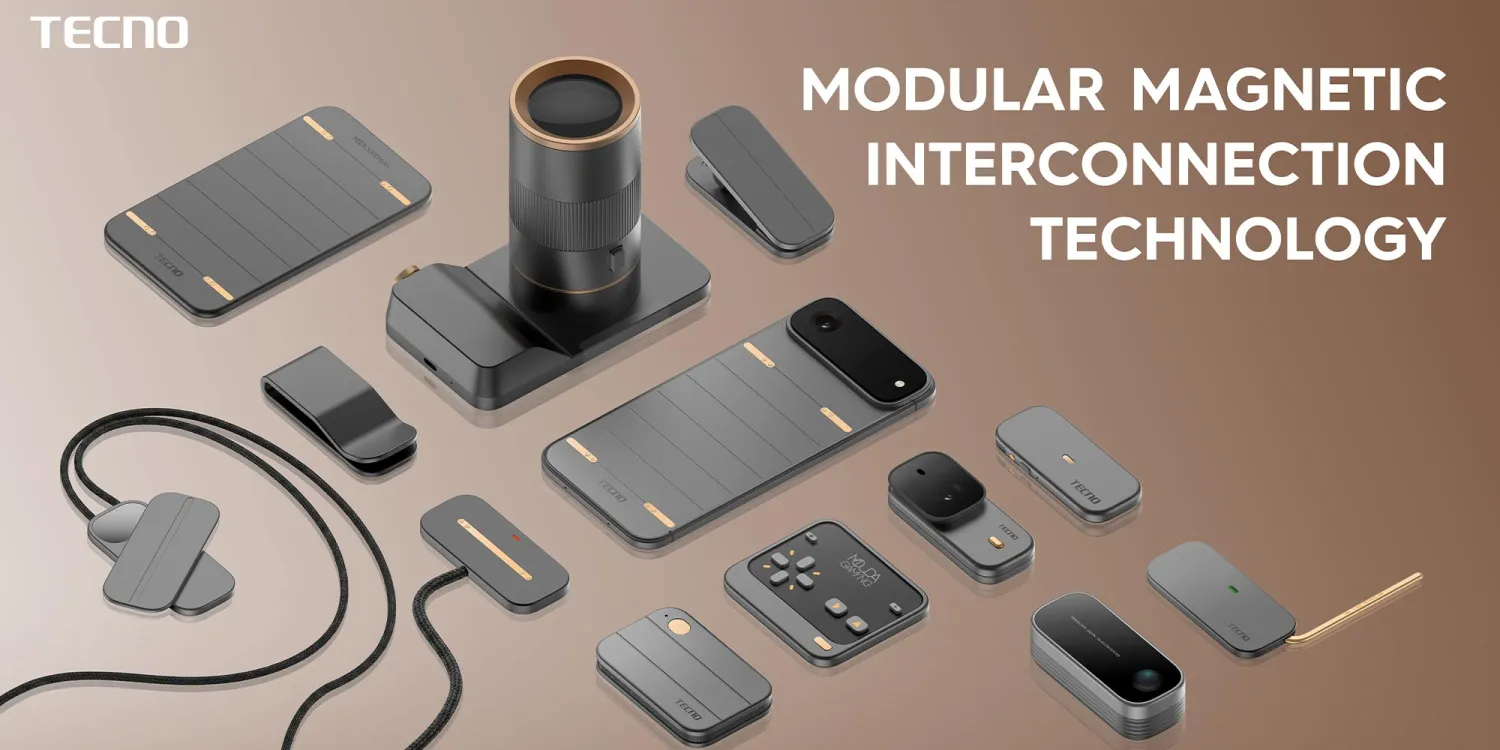
Chinese smartphone brand Tecno has revealed a new modular Android concept phone ahead of MWC 2026, reviving an idea the industry largely abandoned years ago. The company calls it the Modular Magnetic Interconnection Technology concept, and it aims to rethink how accessories and hardware extensions attach to a smartphone.
The concept introduces a thin core smartphone that connects to external modules using magnets and wireless technologies instead of internal ports. Tecno positions the device as a long-term design experiment rather than a commercial product, but it brings modular phones back into the spotlight at a time when smartphone designs have largely plateaued.
What exactly did Tecno announce before MWC 2026?
Tecno previewed a modular Android smartphone concept built around a slim base device and a growing ecosystem of attachable modules. Unlike earlier modular phones that required internal components to be swapped, Tecno’s approach keeps the core phone intact.
The base handset measures 4.9mm in thickness. When users attach a power bank module measuring 4.5mm, the combined thickness remains close to that of a typical modern flagship phone. Tecno says the goal is to preserve everyday usability while enabling optional hardware expansion.
The concept relies on ultra-thin magnetic architecture, allowing modules to snap onto predefined zones on the phone’s rear panel. Once attached, modules connect wirelessly using Wi-Fi, Bluetooth, and mmWave technologies.
How is this different from Google’s Project Ara?
The modular phone concept immediately draws comparisons to Google’s discontinued Project Ara, which was shut down nearly a decade ago.
Project Ara focused on deep hardware modularity. Users could swap processors, cameras, batteries, and other internal components using slide-in blocks and pogo-pin connectors. While ambitious, the system struggled with durability, performance consistency, and mass-market practicality.
Tecno’s concept takes a more restrained approach. Instead of replacing core hardware, modules function more like smart accessories. They extend functionality rather than redefine the phone’s internals. This shift reduces complexity and avoids many engineering problems that plagued earlier modular designs.
What does “modular” mean in Tecno’s ecosystem?
In Tecno’s vision, modularity is about situational hardware, not permanent customization. Users attach modules only when needed and remove them when they are not.
The rear panel of the phone is divided into eight modular zones, clearly marked to guide placement. Magnets ensure alignment, while wireless pairing handles communication between the phone and the module.
This design allows users to tailor the phone for specific tasks, such as content creation, travel, or outdoor use, without carrying bulky accessories all day.
What modules has Tecno shown so far?
Tecno says the early ecosystem includes around ten modules, though not all are intended for daily use. Some of the showcased modules include:
- Action Camera module designed for creators and vloggers
- Telephoto lens module that uses the phone’s screen as a live viewfinder
- Power bank module for extended battery life
- Off-grid communication tools, aimed at emergency or remote use cases
Each module snaps on magnetically and pairs automatically. The phone recognizes the accessory and adjusts software behavior accordingly.
Two design editions, one modular vision
Tecno is also experimenting with visual identity. The concept phone appears in two distinct design editions.
The ATOM edition features a silver aluminum body with red accents. It leans toward a clean, industrial look. The MODA edition adopts a more expressive, tech-forward style with exposed elements and bolder visual cues.
Both versions share the same modular layout and zone-based rear design. The aesthetic difference highlights Tecno’s attempt to blend customization with personal expression.
Why Tecno’s timing matters in 2026
The return of modular phones comes at a time when smartphone innovation feels incremental. Most devices now offer similar processors, displays, and camera capabilities. Modular accessories offer a way to add differentiation without redesigning the entire phone each year.
Tecno’s concept also reflects a shift in how companies approach experimentation. Instead of promising consumer-ready products, brands increasingly use major events like MWC to test ideas and gauge interest.
By framing this as long-term design thinking, Tecno avoids committing to timelines or pricing while still shaping the conversation around future smartphone form factors.
Will this modular phone actually launch?
Tecno has not confirmed any commercial plans. There is no release date, no pricing, and no roadmap. Like many concepts shown at MWC, this device may never reach store shelves in its current form.
However, elements of the concept could influence future Tecno products. Magnetic accessories, modular camera add-ons, and slim external power solutions could all appear in more conventional phones.
Tecno has indicated that the device will be showcased physically at MWC 2026 in Barcelona. Hands-on demonstrations may reveal how reliable and practical the magnetic system is in real-world use.
The bigger picture for modular Android phones
Modular smartphones have failed before, but they continue to resurface because the problem they aim to solve remains unresolved. Users want flexibility without sacrificing simplicity.
Tecno’s concept avoids the pitfalls of deep hardware swaps and instead treats modularity as an extension layer. This makes the idea easier to scale and more compatible with modern smartphone expectations.
As Tecno continues to explore this direction, the concept stands as a reminder that modular design is not dead. It is simply evolving. Whether this approach becomes mainstream remains uncertain, but Tecno has successfully reopened the conversation ahead of MWC 2026.