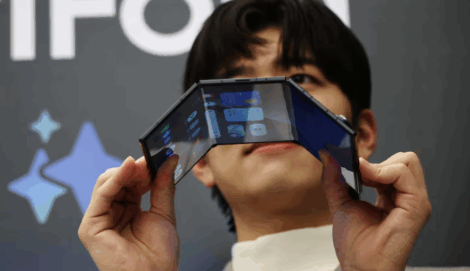
Samsung Galaxy Z TriFold Makes A Bold Entry
Samsung has finally revealed the Samsung Galaxy Z TriFold, its first multi-folding smartphone. The company launched it in Seoul as the foldable race gets hotter. The new device arrives at a time when Chinese brands are pushing hard, and Apple is reportedly preparing its first foldable for next year.
Samsung priced the Galaxy Z TriFold at 3.59 million won, which is roughly $2,440. It unfolds into a wide 10-inch display, which is almost 25% larger than the Galaxy Z Fold 7. The TriFold uses three panels and promises a more tablet-like experience in your pocket.
Samsung Wants To Lead The Multi-Fold Era
Samsung executives said the new trifold aims at users who want cutting-edge tech. They also noted that the device is not meant for mass volumes yet. Rising component costs also made pricing tough, especially as memory and other parts become more expensive.
However, Samsung believes the foldable category will expand. The TriFold could push fresh interest in premium folding devices, even though the market remains niche.
Bigger Battery And Faster Charging Power The Galaxy Z TriFold
Samsung has equipped the TriFold with its largest battery in a flagship device. Moreover, it supports super-fast charging, which boosts the phone to 50% in 30 minutes. The company says the device is built in South Korea and maintains strict quality checks due to the complexity of its design.
The trifold design, however, is new territory. Analysts expect early buyers to test its durability and everyday usability before Samsung scales up production.
Rollout Begins December 12
Samsung will start sales in South Korea on December 12. The Galaxy Z TriFold will then reach China, Singapore, Taiwan, and the UAE before the year ends. The U.S. launch is expected in the first quarter of 2026.
Competition Heats Up With Huawei And Apple
Huawei unveiled a three-way folding phone earlier, raising pressure on Samsung. Apple is also expected to enter the foldable market. Still, foldables stay below 2% of total smartphone shipments today, according to Counterpoint. Yet Samsung’s share jumped to 64% last quarter due to timed launches, showing how quickly trends can shift.