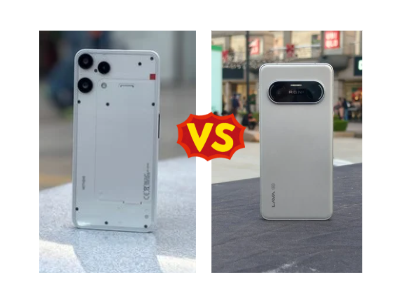
Nothing Phone (3a) Lite vs Lava Agni 4
The smartphone war is heating up in India’s mid-range segment. Nothing’s new Phone (3a) Lite arrives at ₹20,999, while Lava’s Agni 4 enters the ring at ₹24,999. Both promise performance, style, and stamina — but only one truly deserves your money. Let’s break down this spicy face-off.
Design Showdown: Transparent Charm vs Premium Metal Power
Nothing Phone (3a) Lite keeps the brand’s signature transparent design alive, though toned down for affordability. The subtle red accent and single glyph LED add flair without going overboard. It feels light at 199g and comfortable with its 8.3mm profile. The build quality is strong and backed by IP54 certification, making it splash proof[Source: Nothing Phone (3a) Lite_Review.docx].
Meanwhile, Lava Agni 4 flaunts serious craftsmanship. Its aluminium alloy frame feels luxurious, miles ahead of the plastic design on Nothing. The Matte AG Glass back, Gorilla Glass protection, and anti-drop diamond structure make it tough yet glamorous[Source: Lava Agni 4 – Review.docx].
Verdict: Lava wins the design duel for sheer material quality and durability. But if you love transparent tech with personality, Nothing still charms.
Display Face-Off: Brightness vs Balance
The Nothing Phone (3a) Lite offers a 6.77-inch AMOLED screen with HDR10+, 120Hz refresh rate, and an eye-safe 2160Hz PWM dimming. It peaks at 3,000 nits brightness — impressive for its price. Colours feel vivid, though thick bezels dull the premium vibe slightly[Source: Nothing Phone (3a) Lite_Review.docx].
The Lava Agni 4 counters with a 6.67-inch 1.5K+ AMOLED panel, 120Hz refresh rate, and a jaw-dropping 2400 nits brightness. It’s exceptionally bright outdoors and great for HDR streams. The clarity and colour richness edge ahead against Nothing, though competition from models with 4500 nits exists[Source: Lava Agni 4 – Review.docx].
Verdict: Lava’s display is sharper and richer, but Nothing strikes back with better eye comfort. Still, Lava’s screen wins for sheer intensity and detail.
Performance Clash: Power vs Practicality
Both phones use MediaTek chipsets, but performance metrics tell different stories.
Nothing’s Dimensity 7300 Pro handles everyday tasks smoothly. With 8GB RAM and 256GB storage, multitasking feels fluid. Benchmark results — 1015 single-core and 2976 multi-core — confirm mid-tier reliability[Source: Nothing Phone (3a) Lite_Review.docx].
Lava’s Dimensity 8350 5G is much faster, scoring 1436 single-core and 4366 multi-core. Backed by UFS 4.0 storage, 8GB + 4GB virtual RAM, and proven thermal control, it runs heavy apps and games effortlessly[Source: Lava Agni 4 – Review.docx].
Verdict: Lava Agni 4 clearly outperforms Nothing in processing muscle and gaming stability.
AI and Software: Minimalism vs Intelligence
Nothing OS 3.5 on Android 15 delivers a clean interface with quirky design touches. It promises three version updates and six years of security patches — rare at this price. The Essential Key and Essential Space AI tools organise your digital life well[Source: Nothing Phone (3a) Lite_Review.docx].
Lava Agni 4, on the other hand, runs stock Android 15 free of bloatware. It introduces Vayu AI, an emotionally responsive digital companion offering AI tutors, call summaries, and creative tools like text-to-image generation[Source: Lava Agni 4 – Review.docx].
Verdict: Lava’s AI suite is more advanced and makes the experience smarter. Nothing serves simplicity; Lava delivers innovation.
Camera Duel: Balanced Shots vs Missed Chances
Nothing Phone (3a) Lite sports a 50MP main sensor, 8MP ultrawide, and 16MP selfie camera with 4K video capability. Daylight shots look crisp and natural, night mode surprises with balanced results, and selfies appear realistic[Source: Nothing Phone (3a) Lite_Review.docx].
Lava Agni 4 also flaunts a 50MP OIS main sensor and 50MP selfie, but the real output disappoints. Flickering issues, inconsistent tones, and weak ultrawide capture hurt its reliability despite promising specs[Source: Lava Agni 4 – Review.docx].
Verdict: Nothing takes this round for stability and polished image quality.
Battery Battle: Efficiency vs Speed
Both phones flaunt 5000mAh batteries. Lava’s version charges faster at 66W, reaching 50% in 19 minutes. Nothing charges at 33W and offers 5W reverse wired charging for accessories[Source: Nothing Phone (3a) Lite_Review.docx][Source: Lava Agni 4 – Review.docx].
Verdict: Lava leads in charging speed; Nothing wins in long-term efficiency and OS-level optimisation.
Final Verdict: Which One Should You Buy?
Nothing Phone (3a) Lite is perfect for design lovers who value clean software, balanced cameras, and dependable battery life.
Lava Agni 4 is a powerhouse with premium build, blazing speed, and the most ambitious AI seen under ₹25K.
But when everyday reliability and photography matter most, Nothing Phone (3a) Lite stands out as the smarter buy for regular users. Lava Agni 4, however, suits tech enthusiasts craving performance and AI depth.
Winner: Nothing Phone (3a) Lite — the choice for balanced everyday use and smarter value.