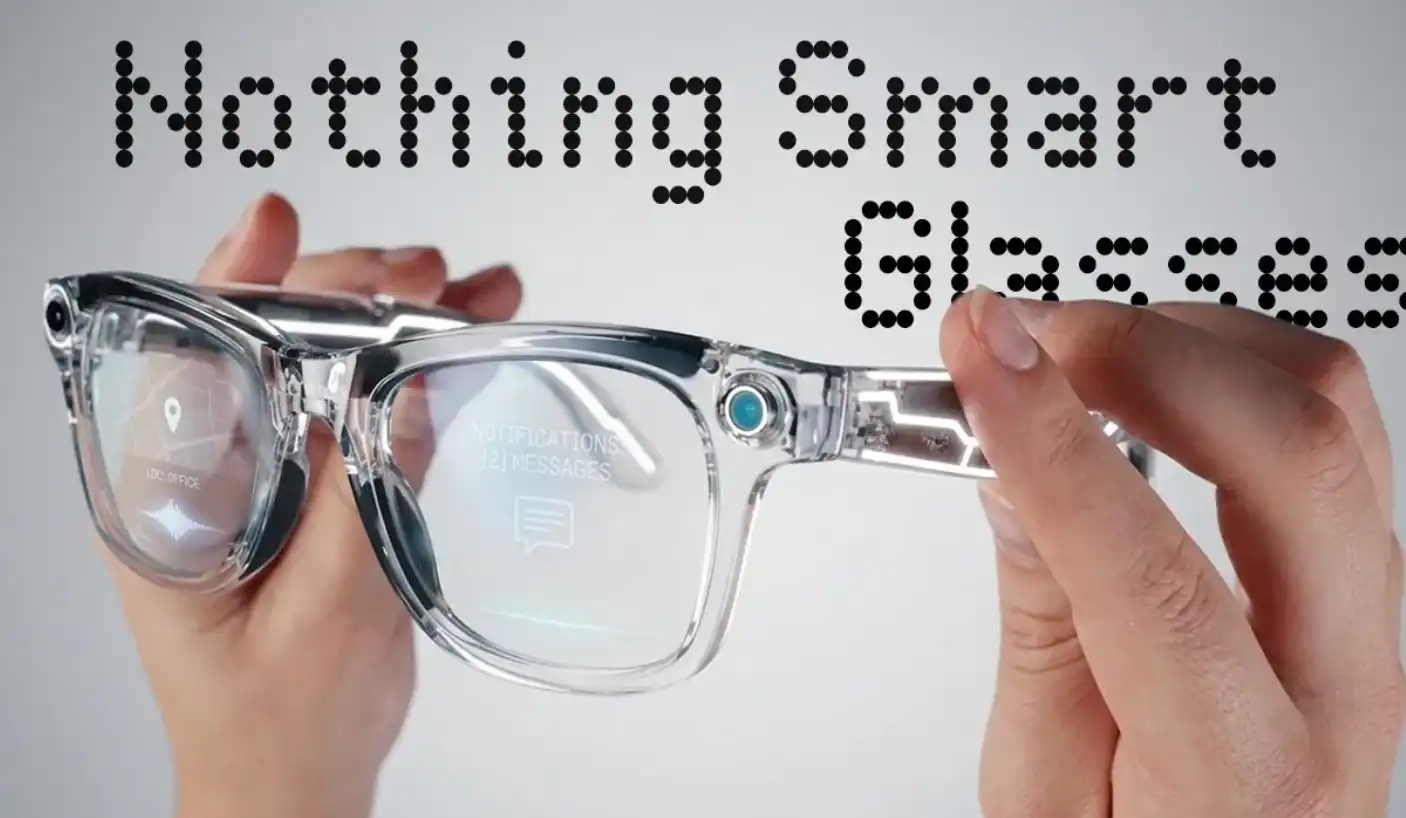
Key Highlights:
- Positioned between the premium and affordable smart-glasses segments.
- Nothing AI Smart Glasses are expected to launch around 2027.
- Likely to include cameras, speakers, microphones, and AR overlays.
- Designed to rely on smartphones for processing and efficiency.
Nothing AI Smart Glasses are expected to mark the company’s entry into the wearable AR category, with a launch targeted around 2027. The glasses are likely to combine augmented reality overlays, voice interaction, and smartphone-powered computing in a lightweight design built for everyday use.
The move signals Nothing’s strategy to compete with established players while keeping its signature minimalist identity intact.
What Are Nothing AI Smart Glasses Expected to Offer?
The Nothing AI Smart Glasses are designed as connected wearable companions rather than standalone computing devices. Instead of heavy onboard processing, they are expected to depend on smartphones for performance tasks.
This approach helps reduce weight while improving battery efficiency.
Based on early details, expected hardware features may include:
- Cameras for capturing photos and videos
- Microphones for voice commands and calls
- Built-in speakers for audio playback
- Augmented reality overlays for notifications and interaction
Together, these features position the glasses as productivity-enhancing wearables rather than entertainment-first gadgets.
Why Is Smartphone Integration Central to the Strategy?
Smartphone integration appears to be the foundation of Nothing’s wearable approach. Instead of building a fully independent AR headset, the company is likely prioritizing a companion-device experience.
As a result, several advantages emerge. First, the glasses remain lightweight. Second, energy consumption stays low. Third, users continue relying on familiar smartphone ecosystems.
This strategy also improves accessibility. Users do not need to learn a new operating environment. Instead, they extend their existing digital workflow into wearable form.
Consequently, everyday adoption becomes more realistic.
How Could Glyph Lighting Define the Design Identity?
Design remains one of Nothing’s strongest differentiators. The company’s signature glyph lighting may appear on the smart glasses as a visual status indicator or notification system.
If implemented, glyph lighting could:
- Signal alerts without sound
- Show device activity
- Reinstate brand identity in wearables
However, practicality remains essential. Smart glasses must feel natural during daily use. Therefore, lightweight materials and balanced ergonomics will likely shape final decisions.
Comfort will be as important as aesthetics.
Where Do Nothing AI Smart Glasses Fit in the Market?
The smart-glasses category is already competitive. Companies like Meta and Samsung are developing premium wearable AR experiences. Meanwhile, several Chinese brands dominate entry-level pricing tiers.
Nothing appears to be targeting the middle ground.
This positioning could help the company appeal to users seeking premium design without flagship-level pricing. At the same time, the strategy may attract early adopters interested in AI wearables but hesitant about expensive first-generation hardware.
Still, differentiation will remain critical. Design alone cannot define long-term success.
What Role Could AR Overlays Play in Daily Use?
Augmented reality overlays represent one of the most important expected features. Instead of immersive virtual environments, the glasses are likely to focus on contextual assistance.
Possible use cases include:
- real-time notifications
- navigation prompts
- voice responses
- contextual reminders
These overlays could transform the glasses into lightweight information layers rather than full AR displays. Therefore, usability may improve significantly. Users interact without pulling out their phones.
How Might Pricing Influence Adoption?
Pricing strategy could determine whether the glasses succeed beyond early adopters. Nothing is expected to position the product between premium smart-glasses ecosystems and budget competitors.
This approach serves two purposes. First, it keeps the product aspirational. Second, it expands accessibility.
However, balancing affordability and perceived value will remain challenging. A lower price risks reducing perceived innovation. A higher price limits adoption.
Finding the middle ground will be essential.
Can Nothing Stand Out in the Wearable AI Race?
Entering the wearable category is a high-stakes move. Unlike smartphones, smart glasses require both technological maturity and social acceptance. Nothing’s advantage lies in its ecosystem-driven approach.
Instead of building a complex standalone device, the company appears focused on simplicity, integration, and everyday usability. If executed correctly, this strategy could reduce friction for first-time wearable users.
However, differentiation beyond design will still matter. Exclusive AI experiences or ecosystem features may become necessary.
What Happens Next for Nothing AI Smart Glasses?
The wearable AI category is evolving quickly. As competitors accelerate development, Nothing’s timeline toward a possible 2027 launch suggests a measured entry rather than a rushed release.
That decision may allow the company to refine usability before mass adoption begins.
If expectations hold, Nothing AI Smart Glasses could become a practical entry point into augmented reality wearables built for daily routines instead of experimental use cases.