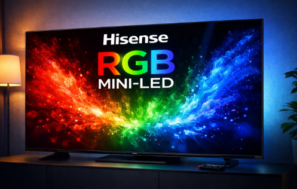
Hisense RGB Mini-LED TVs arrive at the right moment
Micro-LED promised a future of perfect screens. Yet, its cost kept it out of reach. Even in 2026, Micro-LED TVs remain rare and expensive. Now, a new contender is stepping in. Hisense RGB Mini-LED TVs are emerging as a realistic bridge between OLED and the dream of Micro-LED.
RGB Mini-LED keeps the familiar Mini-LED structure. But it changes one core idea. Instead of white or blue backlights with filters, each zone uses pure red, green, and blue light. This allows the panel to control color at the source. As a result, the TV produces brighter images and cleaner shades without relying on heavy filtering.
This shift matters. Filters waste light. They also reduce color purity. RGB Mini-LED removes that bottleneck. It sends precise colors directly to the screen.
Why RGB Mini-LED feels like the next step
The display industry measures color using the BT.2020 HDR standard. Most quantum dot TVs reach about 85 percent of this space. Early RGB Mini-LED panels have already hit full coverage. That means reds look red. Greens stay natural. Blues remain deep without washout.
Brightness is another gain. Mini-LED TVs are already brighter than OLED. RGB Mini-LED pushes this further. Each color channel has its own light source. This improves peak brightness while keeping dark scenes controlled.
For viewers, this means sharper contrast, richer tones, and fewer color shifts. Sports look cleaner. Movies show better shadow detail. Even daylight viewing improves.
A practical replacement for Micro-LED
Micro-LED still delivers unmatched pixel-level control. However, its production remains slow and complex. Each screen needs millions of microscopic LEDs placed with extreme precision. That challenge drives prices sky-high.
RGB Mini-LED avoids this barrier. It builds on existing Mini-LED manufacturing. Brands like Hisense can scale it faster. Screen sizes can drop to living-room friendly formats. Costs can move closer to premium OLED territory.
This is why Hisense RGB Mini-LED TVs matter. They offer a new high-end tier without the impossible price tags of Micro-LED.
What this means for buyers in 2026
The premium TV race is changing. OLED no longer stands alone. Micro-LED remains distant. RGB Mini-LED now fills that gap.
Hisense is positioning this technology as a mainstream high-end option. It targets users who want extreme brightness, accurate colors, and large screens. It also appeals to buyers who feel OLED has reached its ceiling.
In 2026, the question is no longer Micro-LED versus OLED. It is whether RGB Mini-LED becomes the new benchmark for big-screen performance.