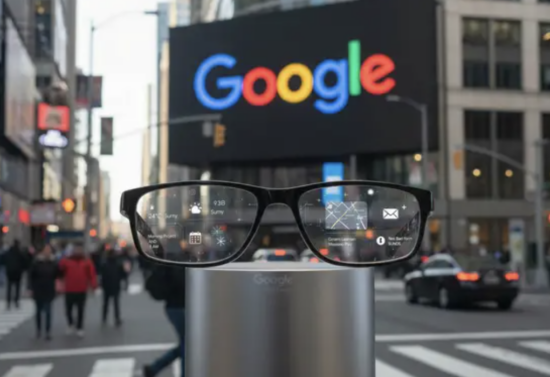
Google Eyes Smartglasses Revolution in 2026
Google is making a bold return to the smartglasses market in 2026. After learning from the 2013 Google Glass, the tech giant plans to launch two AI-powered models aimed at making daily life smarter and more seamless. With the wearable market booming, Google is entering a sector dominated by brands like Meta, HTC, and Rokid, and it aims to set new standards with Gemini and Android XR.
Two Smartglass Variants for Everyday Use
Google’s upcoming smartglasses will come in two variants. The first is an audio-only model. This lightweight version uses speakers, a microphone, and a camera to offer features like real-time translations and navigation. It stays compact and practical, ideal for users who prefer minimal distractions.
The second model integrates a display directly into the lens. This in-lens display allows AR overlays, app projections, and even video playback. Both variants support photography and live assistance, connecting seamlessly with Android devices. Google is also collaborating with design partners such as Samsung, Warby Parker, and Gentle Monster to ensure the glasses remain stylish and comfortable.
Learning from Past Mistakes
Google Glass in 2013 faced criticism for being bulky, expensive, and raising privacy concerns. This time, Google is applying those lessons. By focusing on comfort, usability, and security, the 2026 smartglasses are designed for everyday users rather than tech enthusiasts. Gemini AI integration further enhances their utility, making them capable of anticipating user needs and providing instant assistance.
What Users Can Expect
For consumers, this could mean less reliance on smartphones for quick tasks. Smartglasses might provide directions, translate languages on the go, display notifications, or even capture moments without pulling out a phone. The wearable ecosystem is evolving, and Google’s entry could intensify competition and innovation in this space.
Market Potential and Competition
By combining sleek design with AI-powered functionality, Google could challenge existing players like Meta. The success of smartglasses may also hinge on partnerships and third-party app support on Android XR. If executed well, Google Smartglasses 2026 could redefine how we interact with technology daily.
Conclusion
Google’s smartglasses comeback is shaping up to be more than just a gadget—it’s an experiment in redefining smartphone use. With Gemini AI, design improvements, and practical features, the 2026 models aim to turn a futuristic concept into a functional reality.