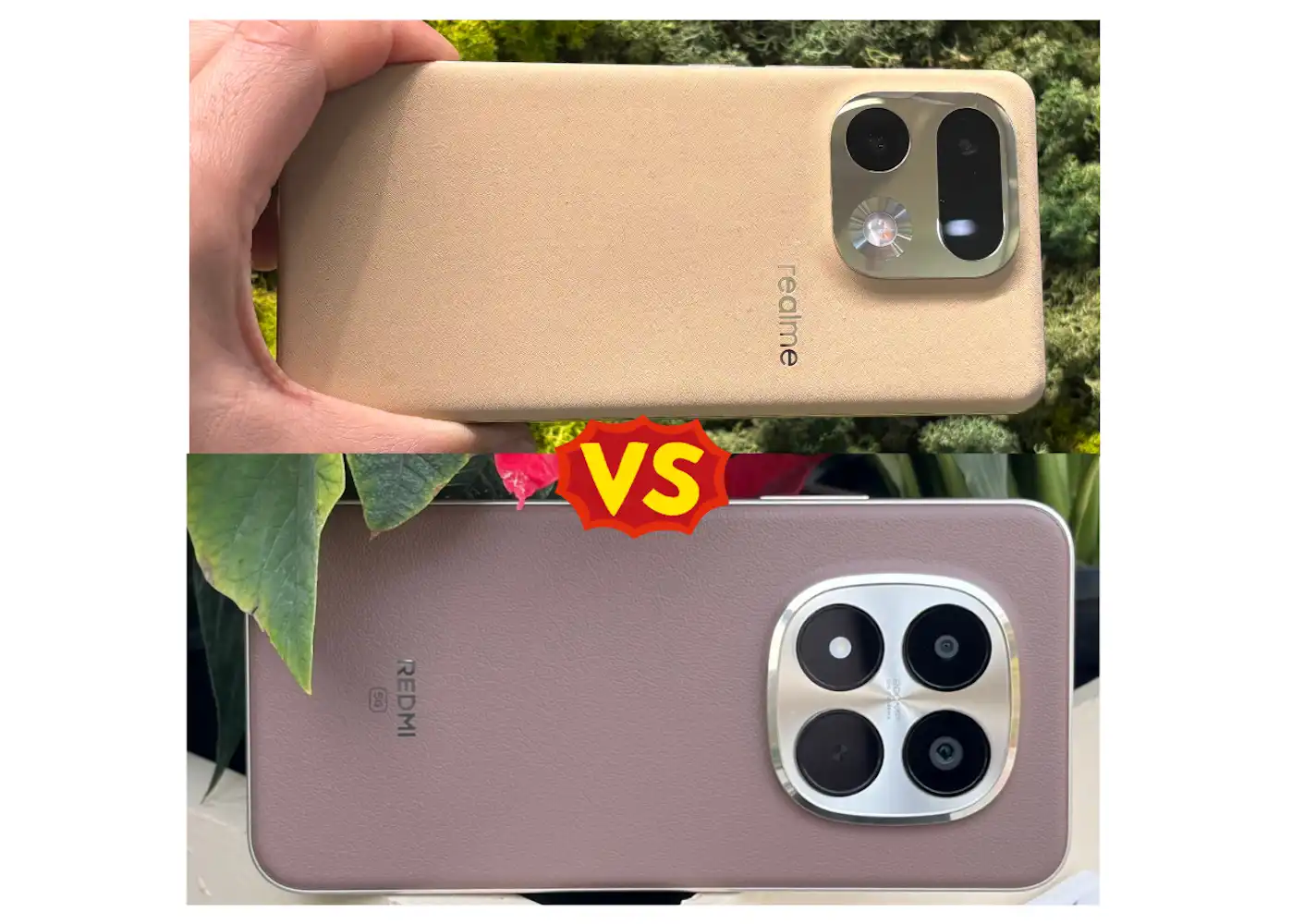
Redmi Note 15 Pro+ vs Realme 16 Pro+: A Comparison
The ₹35,000 to ₹40,000 price bracket has become one of the most competitive smartphone segments in India. Buyers expect near-flagship features without paying flagship prices. This is where the mid range smartphone category continues to evolve rapidly.
In early 2026, two phones stand out in this space. One is the Redmi Note 15 Pro+, and the other is the Realme 16 Pro+. Both aim to deliver premium design, large batteries, advanced cameras, and modern Android experiences.
For buyers searching for the best smartphone under Rs 40,000, understanding the real differences becomes essential. This comparison breaks down both phones across key areas to help readers make an informed decision.
Design and build quality: Premium feel takes center stage
Design plays a major role for buyers in this price range. A mid range smartphone today is expected to feel premium in hand.
The Redmi Note 15 Pro+ adopts a bold and sophisticated look. Its faux leather back in select variants adds grip and visual depth. The aluminium frame improves rigidity, while the Titan Structure enhances drop resistance. The phone also carries multiple IP ratings, including IP69K, which is rare in this segment. However, its large size and weight make one-handed use slightly challenging.
The Realme 16 Pro+ takes a different approach. It uses a bio-based organic silicone back developed with designer Naoto Fukasawa. The texture feels soft, warm, and comfortable during long use. Despite housing a larger battery, it maintains a slimmer profile. Like Redmi, it also offers IP66, IP68, IP69, and IP69K certifications, making durability a shared strength.
Both phones clearly focus on premium materials and rugged builds, reinforcing how far the mid range smartphone segment has matured.
Display experience: Brightness, curves, and clarity
Display quality remains one of the strongest selling points in this category.
The Redmi Note 15 Pro+ features a 6.83-inch 1.5K CrystalRes AMOLED panel with a 120Hz refresh rate. It supports HDR10+ and Dolby Vision. Brightness peaks at around 3200 nits, which ensures clear outdoor visibility. High-frequency PWM dimming helps reduce eye strain during extended use.
The Realme 16 Pro+ pushes visual immersion further. It uses a 6.8-inch AMOLED HyperGlow 4D Curve+ display with a 144Hz refresh rate. The deep quad-curve design creates a seamless edge-to-edge feel. With a claimed peak brightness of up to 6500 nits, sunlight visibility is excellent. The phone also offers ultra-fast touch response, making interactions feel immediate.
For users who consume a lot of video content or enjoy gaming, both displays perform well. Realme leans toward immersion and responsiveness, while Redmi focuses on balanced clarity and colour accuracy.
Software and AI features: Android version matters
Software longevity and AI integration are becoming more important for buyers choosing a mid range smartphone.
The Redmi Note 15 Pro+ runs Xiaomi HyperOS based on Android 15. The interface feels cleaner compared to older MIUI versions. Features like AI Writing, AI Interpreter, AI Search, and Google Gemini integration focus on productivity. System stability and multitasking remain consistent in daily use.
The Realme 16 Pro+ ships with Android 16 out of the box, running Realme UI 7.0. This gives it a long-term advantage. Android 16 introduces improved privacy controls and better background management. Realme also adds creative AI tools such as AI Edit Genie and AI StyleMe, along with practical features like AI Recording and AI Translate.
For readers considering long-term software updates, starting on a newer Android version becomes a meaningful factor.
Performance and daily usage: Consistency over raw power
Performance expectations in this segment have grown steadily. Users want smooth multitasking, reliable gaming, and efficient thermals.
The Redmi Note 15 Pro+ is powered by the Snapdragon 7s Gen 4 processor. It handles everyday tasks smoothly. App launches are quick, and multitasking remains stable. Gaming performance is consistent at high settings, though occasional minor frame dips can appear during extended sessions.
The Realme 16 Pro+ uses the Snapdragon 7 Gen 4 chipset. Benchmark scores place it slightly ahead of Redmi. In real-world usage, the difference appears during sustained tasks. The AirFlow VC cooling system helps maintain stable performance during longer gaming sessions.
Both phones are not designed to replace flagship gaming devices. However, for most users, they deliver dependable performance suited for daily workloads.
Camera systems: Two different approaches to photography
Camera quality often becomes the deciding factor when buyers compare phones under ₹40,000.
The Redmi Note 15 Pro+ features a 200MP main camera with optical image stabilisation. It relies on in-sensor zoom to deliver multiple focal lengths. Daylight images appear sharp and natural. Night photography benefits from controlled highlights and good shadow detail. The front camera delivers balanced selfies without excessive smoothing.
The Realme 16 Pro+ also uses a 200MP main sensor but adds a dedicated 50MP 3.5x telephoto lens. This provides more flexibility for portrait photography. Subject separation looks clean, and background blur appears natural. Low-light shots maintain realistic colour tones. The 50MP front camera suits social media and video use well.
Both phones prioritise clarity and realism. Redmi focuses on sensor size and computational tuning, while Realme expands versatility with additional hardware.
Battery life and charging: Endurance remains strong
Battery performance is a key strength for both devices.
The Redmi Note 15 Pro+ packs a 6500mAh silicon-carbon battery. It comfortably lasts more than a full day with mixed usage. The 100W fast charging support helps reduce downtime significantly.
The Realme 16 Pro+ goes even bigger with a 7000mAh battery. Heavy users can expect extended endurance. Charging is handled by an 80W fast charger. Features like bypass charging help manage heat during gaming sessions.
For users who prioritise long battery life, both phones deliver dependable endurance, reinforcing their appeal as practical mid range smartphones.
Choosing the best smartphone under Rs 40,000
The Redmi Note 15 Pro+ and Realme 16 Pro+ reflect how competitive the mid range smartphone market has become in India. Both phones offer premium design, large batteries, capable cameras, and strong displays.
The Redmi Note 15 Pro+ highlights durability, balanced camera output, and fast charging. The Realme 16 Pro+ focuses on software longevity, display immersion, and portrait versatility.
For readers comparing the best smartphone under Rs 40,000, understanding these differences helps align the device with individual priorities rather than specifications alone.